SUSTAINABILITY
Sustainable industry. Built into the product.
Industrial intelligence is, by definition, sustainable industry: less waste, less energy, less rework and safer working environments. Sustainability is not an annex to our strategy — it is the strategy.
OUR APPROACH
Sustainability is engineered, not declared.
Every project we deliver helps a manufacturer produce more with less. Across the group, this means measurable reductions in raw material waste, scrapped product, energy consumption and unplanned downtime.
We pull on two levers, in this order. First, robotics and optimisation make the line itself more efficient — less raw material, less energy, less time per unit. Second, AI-driven quality control eliminates the scrap, rework and recall cycles that are the single largest source of waste in any modern factory. The output, every year, is more units shipped from fewer inputs.
OUR APPROACH
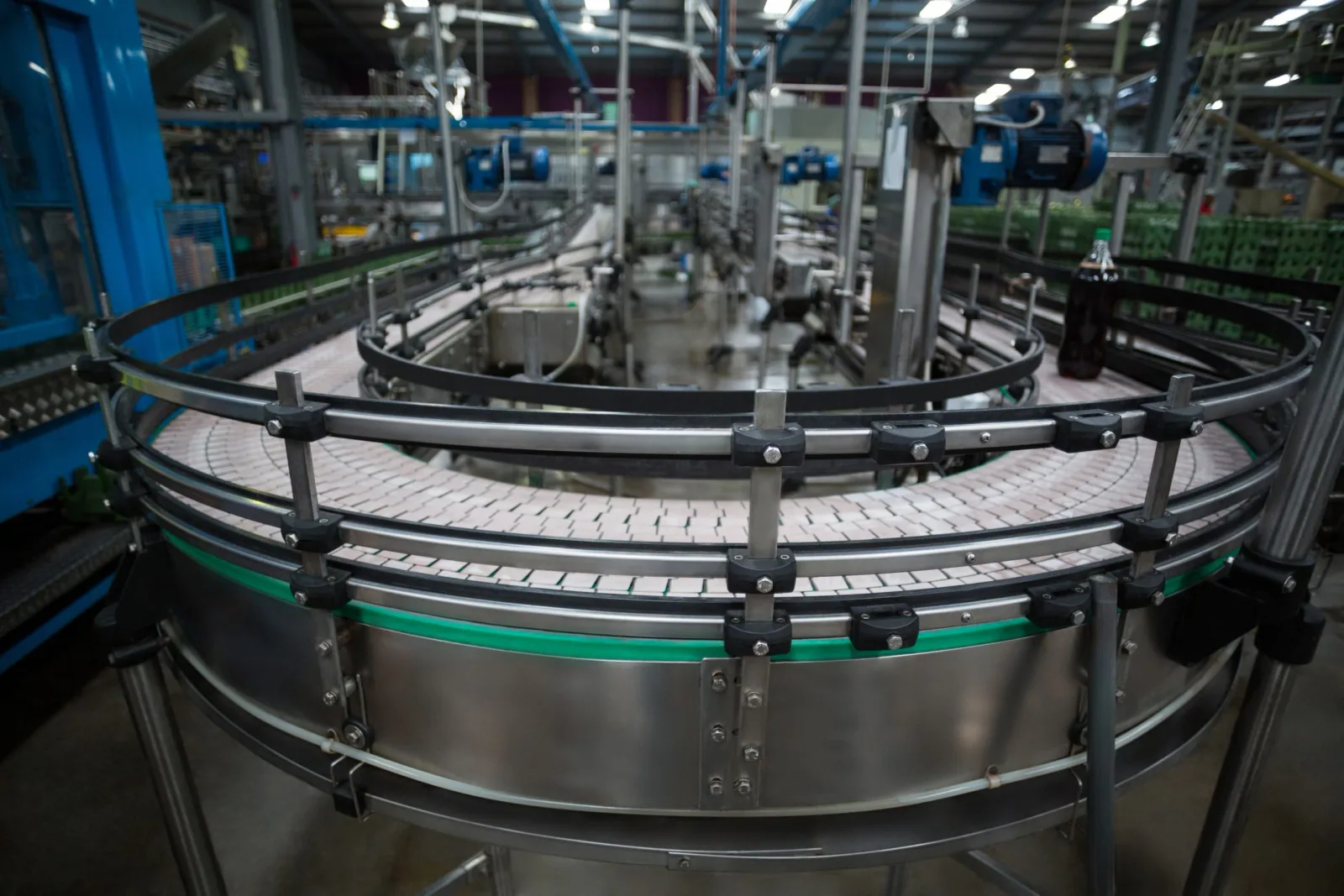
Optimise the line. Eliminate the waste.
LEVER 01 · OPTIMISATION
Robotics and optimisation: do more with less.
Most lines have not been retuned in years. Adaptive control, vision-guided robotics and predictive maintenance bring material, energy and time per unit down — without compromising throughput.
Material yield
Robotic placing, vision-guided dispensing and adaptive part orientation cut overfill, web waste and trim-off. Less raw material in for the same output out.
Up to 12% less raw material per finished unit
Energy per unit
Predictive control loops and machine-learning models tune oven, laser and motor parameters in real time, so energy follows the part — not the worst-case setpoint.
Up to 22% energy reduction on inspected lines
Time and OEE
Vision-guided robotics absorb micro-stops, changeover and reject handling without human intervention. The minutes that used to be lost to humans hand-clearing a jam stop happening.
Up to 30% OEE uplift on retrofitted cells
Right-first-time
Closed-loop control corrects the line before a defect is produced. Quality is engineered in, not inspected after the fact — which is the single biggest lever on energy and material waste.
>99.5% inline pass rate on validated deployments
LEVER 02 · QUALITY CONTROL
Better quality control, less waste at the end of the line.
Quality is the most overlooked sustainability KPI. Every scrapped unit, every rework, every recall is materials, energy and transport already spent — wasted. Inline AI inspection eliminates them at the point they would appear.
Scrap eliminated
100% inline inspection at production speed: every unit is checked, every defect is rejected at the point it appears — before it gets packed, labelled, palletised or shipped.
~18% average scrap reduction
Rework avoided
Detecting a wrong label or a missing component on the line costs less, by orders of magnitude, than detecting it at the warehouse or at the customer. We move that detection point as upstream as it gets.
Rework time cut by half on AI-equipped lines
Recalls prevented
100% serialisation and verification (ISO 15415 / 15416, 21 CFR Part 11) plus deep-learning artwork checks keep recalls — the most carbon-intensive event in any consumer-goods supply chain — out of the picture.
Zero verifiable label recalls across audited customers
False rejects minimised
A false reject is perfectly good product thrown away. AI models calibrated per line cut false positives by 70%+ versus rule-based systems while keeping detection above 99.9%.
~70% fewer false rejects vs. rule-based vision
REAL-WORLD IMPACT
What our customers measure once we are on the line.
18%
Average scrap reduction
22%
Energy per unit (best case)
30%
OEE uplift on retrofits
70%
Fewer false rejects
Indicative averages drawn from AI-equipped customer lines across pharma, food & beverage, automotive and packaging. Audited per-customer data available under NDA.
Our ESG pillars
Three pillars, measured year over year.
Environmental gains are the headline. They sit on top of a social and governance commitment we hold ourselves to with equal weight.
Environment
Reduce energy and material waste in our customers’ production lines through AI-driven inspection, real-time control and predictive maintenance.
Outcome
Average 18% reduction in scrap on AI-equipped lines
Social
Build safer, more meaningful jobs. We automate dangerous and repetitive tasks while investing in continuous training for our teams and customers.
Outcome
95% of staff in ongoing training programmes
Governance
ISO 9001-2015 certified operations, regulated industry validation processes and a strict ethics charter applied across the four companies.
Outcome
Group-wide code of conduct and supplier policy
Aligned with the UN SDGs
Our work contributes directly to SDG 8 (Decent work), SDG 9 (Industry, innovation and infrastructure) and SDG 12 (Responsible consumption and production). We publish annual progress against these objectives.
Decent Work and Economic Growth
Industry, Innovation and Infrastructure
Responsible Consumption and Production
Our commitment
AIS Group has committed to climate-neutral operations by 2030 and to reporting ESG performance under the CSRD framework as soon as we reach the applicable thresholds.
Until we reach the thresholds for the Corporate Sustainability Reporting Directive (CSRD), AIS Group publishes an annual ESG update covering Scope 1 / 2 emissions across the five offices, supplier policy compliance and the cumulative impact our solutions have had on customer lines.
Want to know more about our ESG strategy?
Our annual ESG progress report is available to investors and customers on request.